
AURICID IM: Advanced Electroless Gold Plating for Electronics
In electronics manufacturing, the surface finish on a printed circuit board is not a cosmetic decision it is an engineering one. As PCBs become denser, components smaller, and operating frequencies higher, the chemical and physical properties of the finish directly affect device performance, reliability, and yield. The wrong finish means poor solder joints, oxidised pads, field failures, and costly recalls.
This is the problem that electroless immersion gold plating was developed to solve. And it is the problem that AURICID IM Progressive Surface Systems’ advanced immersion gold chemistry is specifically engineered to address at the production scale.

What Is Electroless Plating?
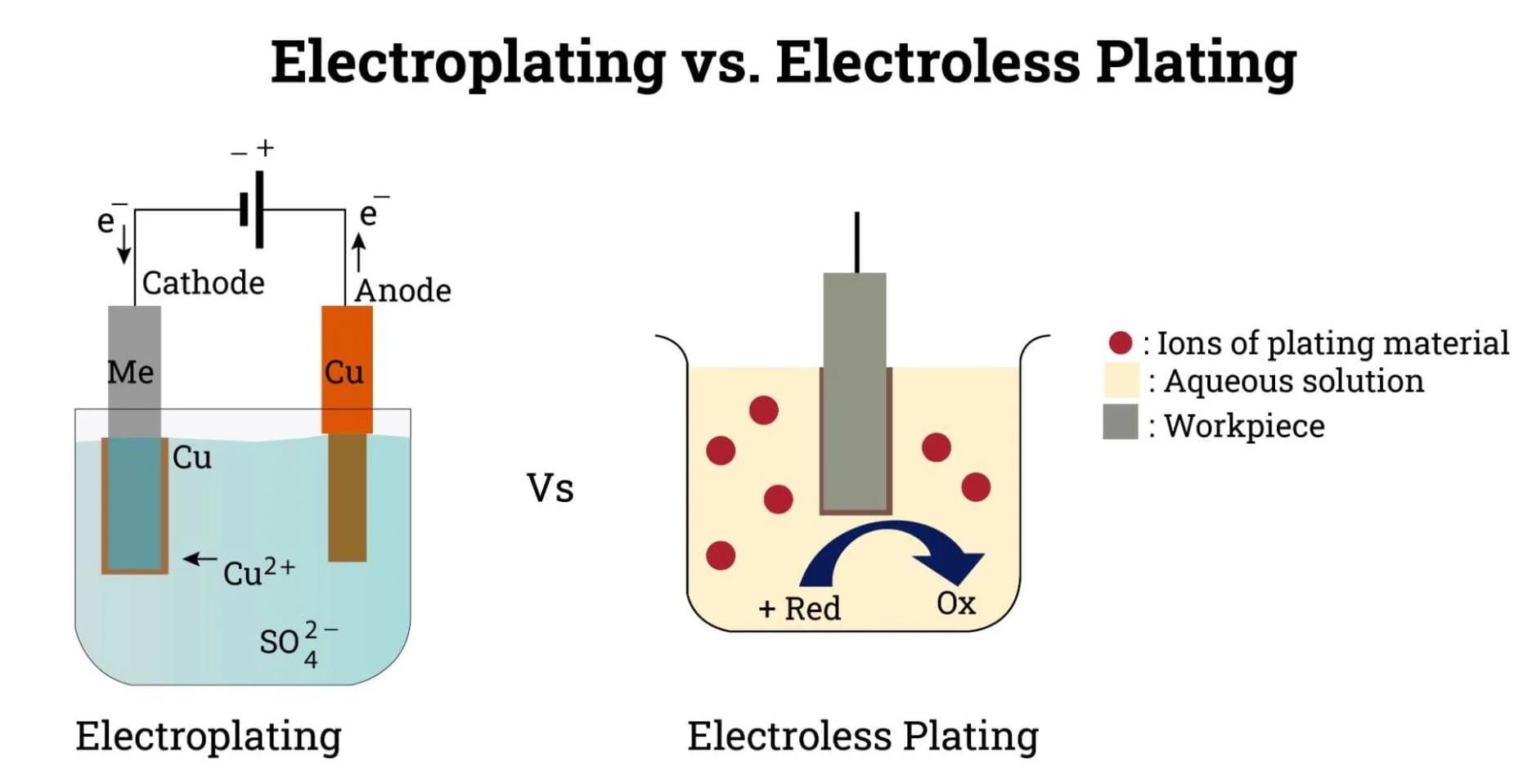
Electroless plating is an autocatalytic chemical deposition process that deposits a metal layer onto a substrate without the need for an external electric current. Instead of relying on electrical energy to drive metal ions onto the surface, electroless plating uses a controlled chemical reducing agent in the bath to initiate and sustain the deposition reaction.
The result is a deposit that is perfectly uniform in thickness across the entire surface of the part, including inside holes, along recessed features, and across complex three-dimensional geometries where electrical current simply cannot reach evenly. This makes electroless plating the preferred method for modern PCB finishing, where pad geometry, via structures, and fine-pitch traces demand consistent, controlled deposition that conventional electroplating cannot reliably deliver.
Electroless vs Electroplating: What Is the Practical Difference?
Both processes deposit a metal layer onto a substrate, but they work in fundamentally different ways and produce meaningfully different results in practice.
Electroplating uses an external power source to drive metal ions from an anode through an electrolyte solution and onto the part, which acts as the cathode. Because deposition is driven by current density, metal accumulates preferentially at edges, corners, and high points, areas where the electrical field is strongest. On a PCB, this produces the “dog-bone effect”: over-plated pad edges and under-plated pad centres, which creates assembly problems during high-precision component placement.
Electroless plating eliminates this problem entirely. Deposition is driven by chemical concentration, not electrical proximity. Every surface in contact with the bath receives the same chemical energy, producing uniform thickness regardless of geometry. For modern HDI boards, fine-pitch BGAs, and flex circuits where electrical continuity cannot be maintained during plating, electroless is not just a better option, it is the only viable one.
| Key difference: Electroplating deposits vary with current density. Electroless deposits are uniform across all geometries. For complex PCB surfaces, BGAs, and isolated pads, electroless gold is the reliable choice. |
Types of Electroless Gold Finish: ENIG, ENEPIG, and Immersion Gold
Not all gold finishes are the same. The three most common electroless gold-based finishes each serve a distinct purpose, and selecting the right one depends on the board’s application requirements.
| Finish Type | Primary Application | Key Advantage |
| ENIG (Electroless Nickel Immersion Gold) | General-purpose solderability and shelf life | Best all-round performance for SMT assembly |
| ENEPIG (Electroless Nickel Electroless Palladium Immersion Gold) | Solderable and wire-bondable surfaces | The universal finish for high-end HDI and wire bonding |
| Immersion Gold (standalone) | Oxidation resistance on flat surfaces | Cost-effective, co-planar surface for SMT |
AURICID IM is formulated to perform across all three categories. For ENIG applications, it provides the immersion gold layer that protects the electroless nickel deposit and ensures reliable solderability. For ENEPIG, it delivers the final gold layer with the precision and purity required for both solder and wire bond connections.
The Black Pad Problem, and How AURICID IM Addresses It
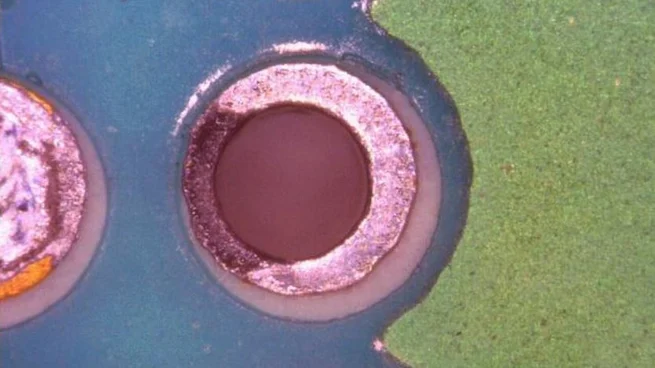
One of the most significant failure modes in ENIG finishing is a defect known as “black pad.” It occurs when the immersion gold reaction, a displacement process in which gold ions replace nickel atoms on the surface, becomes too aggressive, causing localised corrosion of the underlying nickel layer. The corroded nickel interface is brittle, poorly solderable, and often only reveals itself as a field failure after assembly.
AURICID IM is specifically formulated to control the displacement reaction rate. Its advanced chemistry slows the gold-for-nickel exchange, producing a tight, fine-grained gold deposit that seals the nickel surface without attacking it. The result is a non-porous, high-integrity interface that eliminates the conditions that cause black pad and delivers reliable, consistent solderability across the entire board.
Surface Uniformity and Bath Stability at Production Scale
In high-volume PCB manufacturing, two factors determine whether an electroless gold chemistry is viable beyond the lab: surface uniformity across the board and bath stability over production time.
Surface uniformity matters because any variation in gold thickness across pads directly affects solder joint quality. Thin spots on a pad leave the nickel exposed to oxidation. Thick deposits on fine-pitch pads risk bridging during assembly. AURICID IM’s controlled chemical kinetics deliver consistent deposit thickness from the first board to the last in a production run, and from the smallest pad to the largest on the same board.
Bath stability matters because an unstable bath creates unpredictable results, gold loss onto tank walls through “wild” plating reactions, and expensive unplanned downtime. AURICID IM incorporates advanced stabilisers that prevent extraneous deposition, maintain consistent bath chemistry between analysis cycles, and support regular replenishment without the bath chemistry drifting out of specification.
Key Performance Benefits of AURICID IM
- Uniform surface co-planarity: Critical for fine-pitch SMT component placement and BGA pad preparation, where any variation in surface height causes tombstoning, poor solder joints, or misaligned pick-and-place.
- Superior corrosion resistance: The high-purity gold deposit acts as a non-porous barrier, protecting the underlying nickel from oxidation during storage and throughout the product’s operational life.
- RoHS-compliant chemistry: Fully compatible with lead-free soldering processes, supporting compliance with RoHS and REACH requirements without process compromise.
- Consistent electrical contact resistance: The purity and uniformity of the deposit ensures minimal contact resistance — essential for membrane switches, connectors, and touch-sensitive interfaces.
- Black pad prevention: Controlled displacement reaction chemistry eliminates the aggressive nickel-attack phase that causes this common and costly ENIG defect.
- Production-scale bath stability: Advanced stabilisers prevent wild plating and gold loss, reducing downtime and keeping operating costs predictable.
Technical Support and Process Assurance
A chemistry is only as reliable as the process control behind it. Progressive Surface Systems provides laboratory support services alongside AURICID IM, including regular bath audits, cross-sectional analysis of deposit quality, and process optimisation guidance. This ensures that your gold plating process remains within specification and that any drift in bath chemistry is identified and corrected before it affects production quality.
Whether you are running ENIG on a high-volume consumer electronics line or ENEPIG for precision aerospace and medical applications, the combination of AURICID IM chemistry and our technical support provides the process assurance you need to maintain consistent, reliable results.
Discuss Your Gold Plating Requirements
For detailed technical data on AURICID IM, process guidelines, or application support for your specific board type and production environment, contact our technical team.
Get in touch: progressivesurfacesystems.com/enquiry